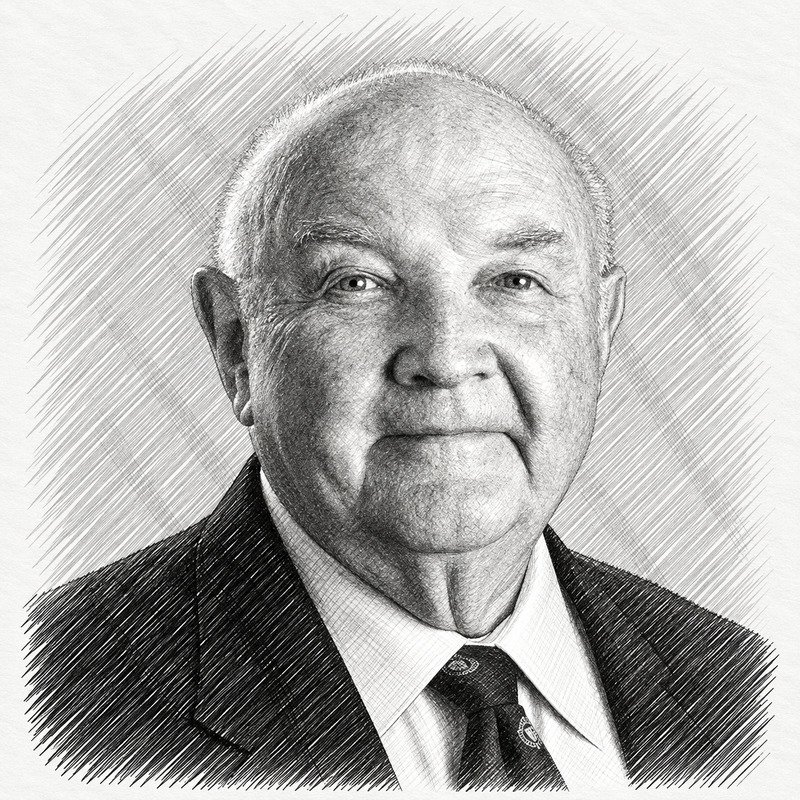
PERSON
Albert R. Jonsen
1931–2020
Bioethics · Theology
American bioethics scholar and educator whose work helped develop methods for clinical ethics and document the early history of bioethics.
At a Glance
- Primary fields
- Bioethics; Theology
- Intellectual streams
- Clinical ethics & professionalism; Principles & methods
- Modes of contribution
- Conceptual / theoretical; Clinical / professional; Pedagogical
01 / LIFE & CONTEXT
Albert R. Jonsen (1931–2020) participated in early bioethics and later wrote its history. A theologian by training, he taught ethics to medical students at the University of California, San Francisco, served on the National Commission for the Protection of Human Subjects from 1974 to 1978, and led the University of Washington department that became Medical History and Ethics from 1987 to 1999.
02 / KEY CONTRIBUTIONS
Commission work connected Jonsen to the deliberations behind the Belmont Report. With Mark Siegler and William Winslade, he wrote Clinical Ethics, offering a practical framework for discussion of cases at the bedside. Work with Stephen Toulmin renewed interest in casuistry, a mode of reasoning attentive to paradigm cases and circumstances. In The Birth of Bioethics, he also examined the field's institutional and intellectual beginnings.
03 / HISTORICAL ROLE
Few figures so directly connected federal research-ethics deliberation, clinical consultation, moral method, and historical reflection. Jonsen's work helped make case-based reasoning usable in medicine while recording how the field that used it came into being.
04 / SELECTED WORKS & CONTRIBUTIONS
- The Abuse of Casuistry: A History of Moral ReasoningBook · 1988
- The Birth of BioethicsBook · 1998