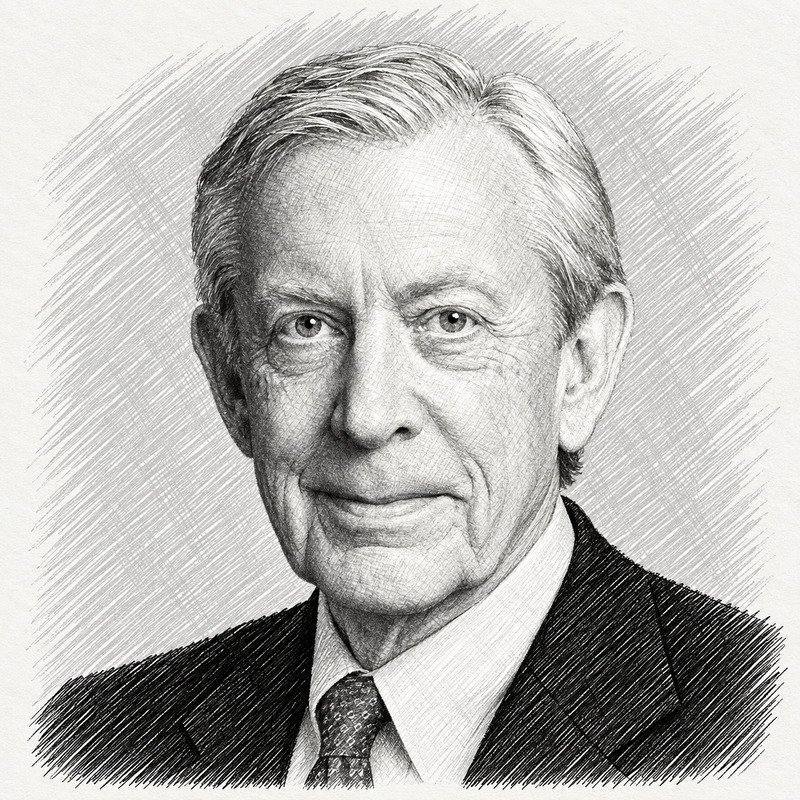
PERSON
Alexander M. Capron
1944–
Law · Bioethics · Health policy
American legal scholar and bioethicist whose work has connected law, medicine, health policy, research ethics, genetics, and international bioethics.
At a Glance
- Primary fields
- Law; Bioethics; Health policy
- Intellectual streams
- Law & public policy; Research ethics & consent; Institution building
- Modes of contribution
- Legal / policy; Institutional; Pedagogical; Public / translational
01 / LIFE & CONTEXT
Alexander M. Capron's legal career has moved among universities, federal deliberation, and international health governance. Educated at Swarthmore and Yale Law School, he became a founding fellow of The Hastings Center and later joined the University of Southern California, where he worked across law and medicine and helped establish the Pacific Center for Health Policy and Ethics. He served as executive director of the President's Commission for the Study of Ethical Problems in Medicine and Biomedical and Behavioral Research and later held a directorship at the World Health Organization.
02 / KEY CONTRIBUTIONS
Questions of consent, research, genetics, transplantation, determination of death, reproductive technologies, and access to care have all figured in Capron's scholarship and policy work. At the President's Commission from 1979 to 1983, he worked where interdisciplinary ethical arguments had to become public reports and usable policy analysis. His later international work extended that engagement to global health, rights, and research ethics.
03 / HISTORICAL ROLE
Independent centers, presidential commissions, universities, and international organizations became sites where ethical analysis could inform collective decisions about medicine. Capron worked across them, giving the field's legal and public-policy strand a practical reach beyond academic debate.
04 / CONNECTIONS
Member of: National Bioethics Advisory Commission