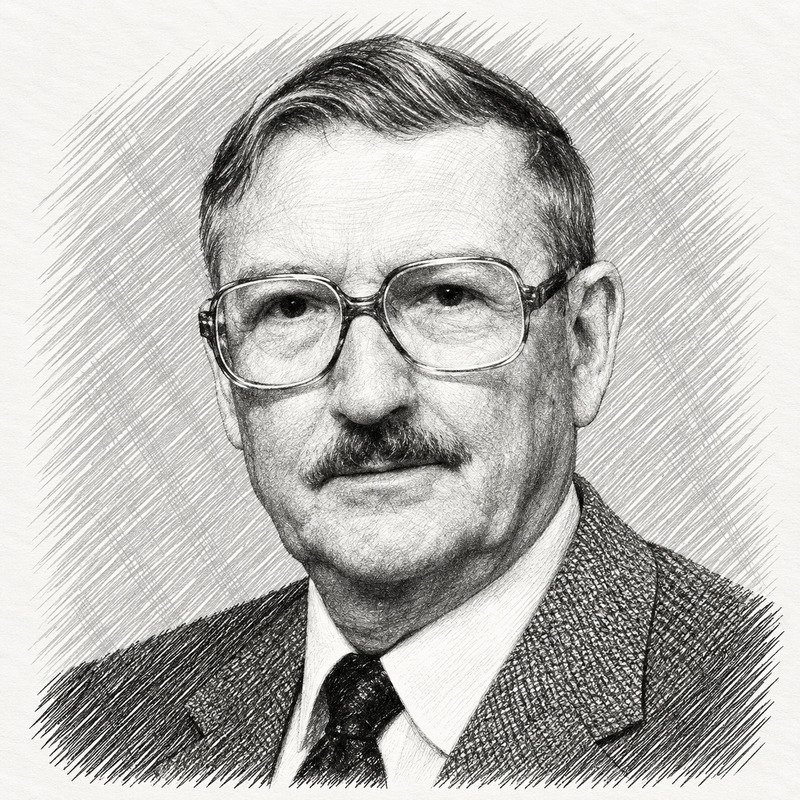
PERSON
Van Rensselaer Potter
1911–2001
Biochemistry · Oncology
American biochemist and cancer researcher who introduced a prominent early use of the term bioethics and conceived it broadly as a bridge between biological knowledge, human values, survival, and the future of life.
At a Glance
- Primary fields
- Biochemistry; Oncology
- Intellectual streams
- Boundary expansion
- Modes of contribution
- Conceptual / theoretical; Empirical / scientific; Public / translational
01 / LIFE & CONTEXT
A career in cancer biochemistry led Van Rensselaer Potter (1911–2001) toward questions larger than oncology. Associated for decades with the University of Wisconsin–Madison's McArdle Laboratory, he came to see biological knowledge as inseparable from decisions about humanity's future and the conditions that sustain life. His scientific formation mattered to the ethical project he developed: he was asking what kinds of wisdom should accompany growing biological power.
02 / KEY CONTRIBUTIONS
Around 1970–1971 Potter independently introduced and developed the term bioethics as a bridge between biological science and human values. His usage encompassed ecology, population, medicine, and survival. It did not confine the field to the clinic or to the protection of research subjects; responsible action toward the environment and future generations belonged within its scope.
03 / HISTORICAL ROLE
The name Potter advanced was adopted by a field whose American institutions often focused more narrowly on medicine and research. That divergence is historically instructive. His ecological and global conception preserves an alternative account of what bioethics might include, one revisited as environmental and global-health ethics have gained attention.
04 / SELECTED WORKS & CONTRIBUTIONS
- Bioethics: Bridge to the FutureBook · 1971
- Global Bioethics: Building on the Leopold LegacyBook · 1988