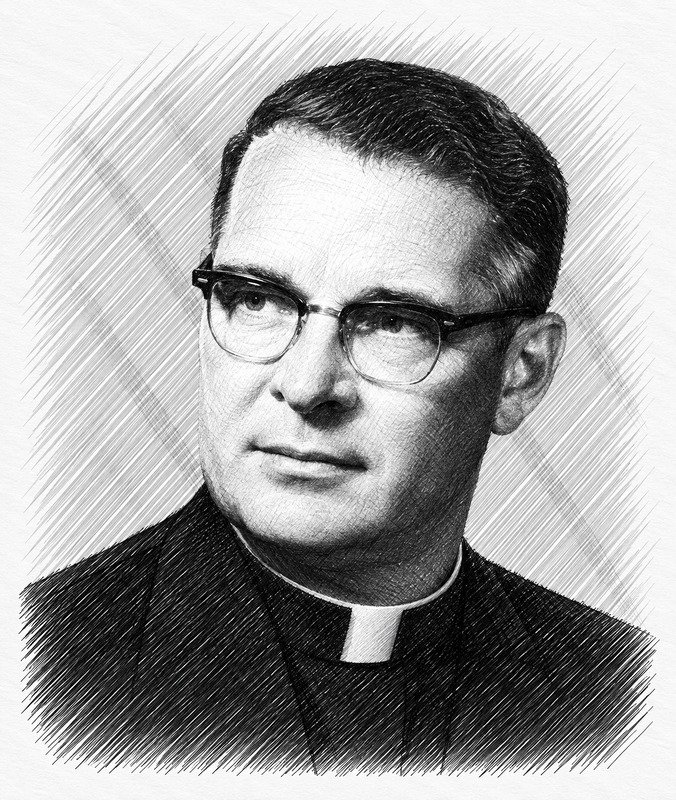
PERSON
Richard A. McCormick
1922–2000
Theology · Christian ethics · Medical ethics
American Jesuit moral theologian and scholar of medical ethics whose work brought Catholic moral theology into sustained engagement with biomedical ethics, reproductive ethics, end-of-life questions, and moral methodology.
At a Glance
- Primary fields
- Theology; Christian ethics; Medical ethics
- Intellectual streams
- Theological ethics; Clinical ethics & professionalism
- Modes of contribution
- Conceptual / theoretical; Theological / religious; Pedagogical; Public / translational
01 / LIFE & CONTEXT
Catholic moral theology met the new questions of biomedicine in Richard A. McCormick's (1922–2000) teaching and writing. A Jesuit priest, he taught moral theology before holding the Rose F. Kennedy Professorship of Christian Ethics at Georgetown's Kennedy Institute of Ethics. He moved to the University of Notre Dame in 1986. His career unfolded amid disputes about reproduction, treatment near death, genetics, and the limits of intervention.
02 / KEY CONTRIBUTIONS
McCormick wrote on abortion, reproductive ethics, clinical treatment, experimentation, euthanasia, and genetics. He drew on Catholic moral tradition while attending to particular circumstances, proportionality, and the relationships among clinicians, patients, and families. Scholarship and public commentary made him an interlocutor between that tradition and the pluralistic arguments developing in bioethics.
03 / HISTORICAL ROLE
The Kennedy Institute placed religious moral reasoning inside one of American bioethics' formative interdisciplinary settings. McCormick's work shows the field emerging through conversation—and disagreement—among theology, medicine, philosophy, and public policy, rather than through a simple departure from religious ethics.
Roles and contributions
-
Rose F. Kennedy Professor of Christian Ethics
1986