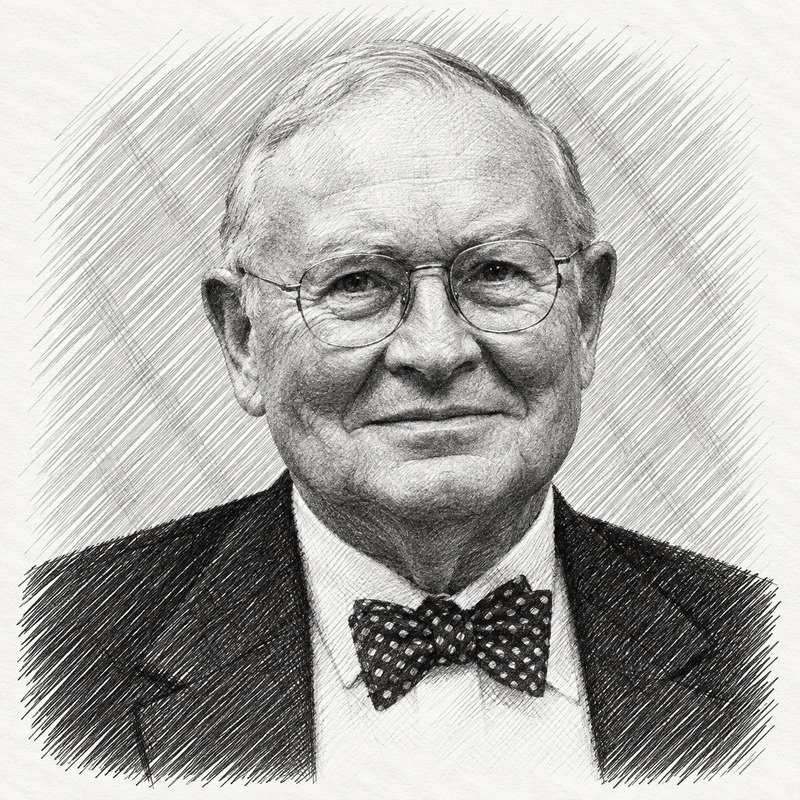
PERSON
Joseph Fletcher
1905–1991
Theology · Medical ethics
American theologian and medical ethicist whose Morals and Medicine (1954) and later situation ethics brought questions of patient choice, reproduction, death, and medical decision-making into sustained ethical debate.
At a Glance
- Primary fields
- Theology; Medical ethics
- Intellectual streams
- Theological ethics; Clinical ethics & professionalism
- Modes of contribution
- Conceptual / theoretical; Theological / religious; Public / translational; Pedagogical
01 / LIFE & CONTEXT
Before bioethics had a settled institutional identity, Joseph Fletcher (1905–1991) was already debating contraception, assisted reproduction, dying, and transplantation. A theologian trained in social ethics, he taught for years at the Episcopal Theological School and later at the University of Virginia, where his work crossed medicine, religion, and ethics. New technologies and changing expectations of individual choice unsettled the religious and professional assumptions within which he had begun.
02 / KEY CONTRIBUTIONS
Fletcher's situation ethics emphasized judgment in particular circumstances rather than strict adherence to fixed rules. In medical and reproductive questions he pressed a strongly choice-oriented, consequentialist position that provoked debate within theology and emerging biomedical ethics. His writing made contraception, sterilization, artificial insemination, euthanasia, and other contested practices subjects of explicit moral argument.
03 / HISTORICAL ROLE
Fletcher belongs to the passage from theological medical ethics into interdisciplinary bioethics. Many of his answers remained disputed; his willingness to question established norms also helped define what the new field would have to discuss.
04 / SELECTED WORKS & CONTRIBUTIONS
- Morals and MedicineBook · 1954