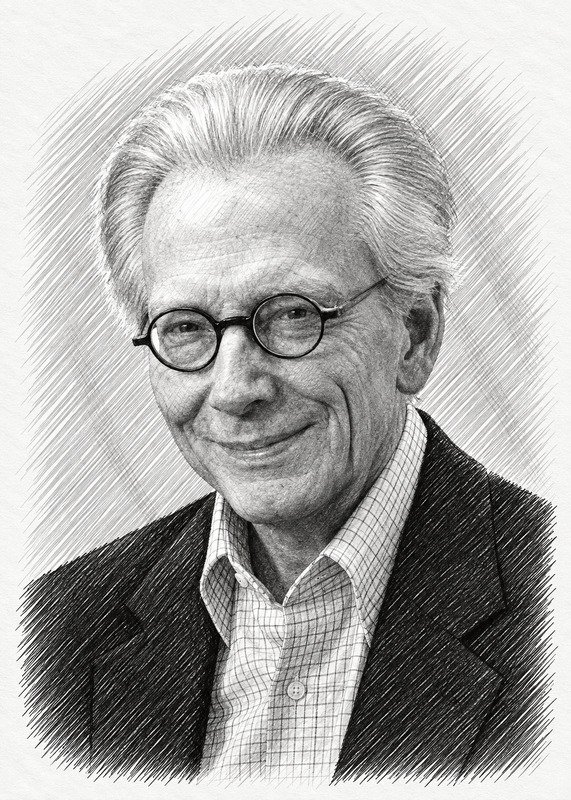
PERSON
James F. Childress
1940–
Religious studies · Bioethics
American ethicist and bioethics scholar whose collaborative work on principles of biomedical ethics became a major framework for teaching and analyzing ethical problems in health care.
At a Glance
- Primary fields
- Religious studies; Bioethics
- Intellectual streams
- Principles & methods
- Modes of contribution
- Conceptual / theoretical; Pedagogical; Public / translational
01 / LIFE & CONTEXT
Religious and moral philosophy shaped James F. Childress's entry into biomedical ethics. After graduate study at Yale, he held a professorship of Christian Ethics at Georgetown's Kennedy Institute and then built a long career at the University of Virginia across religious studies, ethics, policy, and medicine. National advisory work brought his scholarship into questions of transplantation, gene therapy, and biomedical governance.
02 / KEY CONTRIBUTIONS
With Tom L. Beauchamp, Childress wrote Principles of Biomedical Ethics, developing a framework organized around autonomy, nonmaleficence, beneficence, and justice. Beyond that collaboration, he examined moral reasoning, paternalism, transplantation, and the relation between religious and secular argument. Teaching and national service carried these questions into medical education and policy deliberation.
03 / HISTORICAL ROLE
The four-principles framework became a common language of biomedical ethics, though never an uncontested one. Childress's career also traces how earlier religious and philosophical inquiry moved into medical schools and public advisory institutions.
04 / SELECTED WORKS & CONTRIBUTIONS
- Principles of Biomedical EthicsBook · 1979