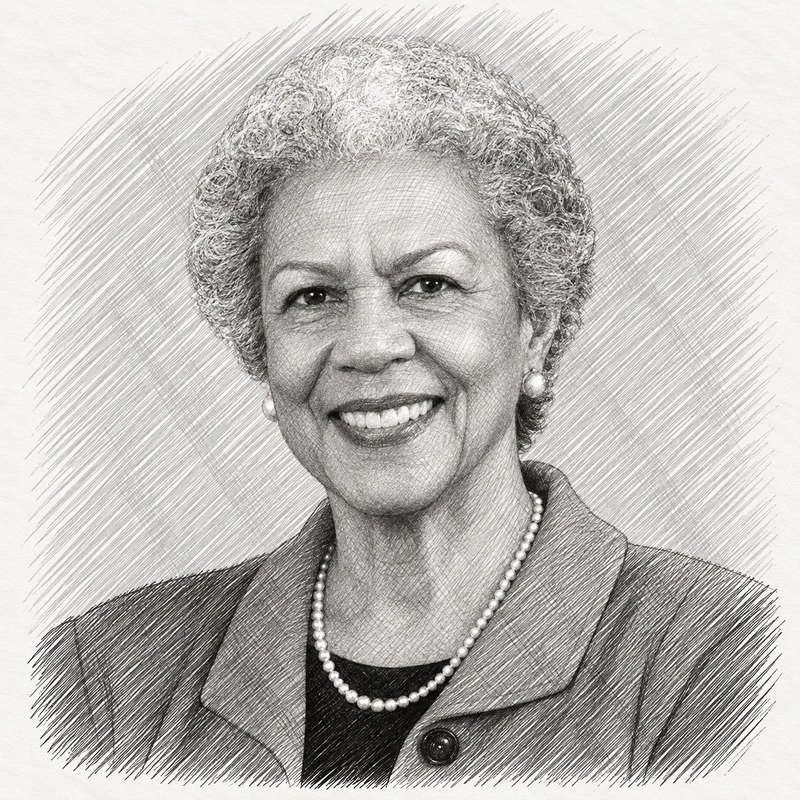
PERSON
Patricia A. King
1942–
Law Civil Rights
American legal scholar and civil rights lawyer whose work helped shape American bioethics through national ethics commissions, health law, and sustained attention to justice, race, and the social dimensions of biomedical policy.
At a Glance
- Primary fields
- Law Civil Rights
- Intellectual streams
- Law & public policy; Justice & allocation; Research ethics & consent
- Modes of contribution
- Legal / policy; Critical / corrective; Institutional; Public / translational
01 / LIFE & CONTEXT
Patricia A. King came to bioethics through civil-rights law. Before joining Georgetown University Law Center in 1973, she held senior federal civil-rights positions. The National Commission for the Protection of Human Subjects of Biomedical and Behavioral Research brought her into research ethics as the Tuskegee syphilis study intensified scrutiny of studies involving vulnerable people. She later served on national bodies considering recombinant DNA, radiation experiments, embryo research, and the Human Genome Project's ethical, legal, and social implications.
02 / KEY CONTRIBUTIONS
King took part in the Commission's deliberations that produced the Belmont Report. Her own emphasis on justice challenged a tendency to treat autonomy and consent as sufficient answers to every research-ethics question. Who bears risk, who receives benefit, and how race and social position affect participation also matter. Through teaching and scholarship, she brought legal analysis to medicine, genetics, reproductive health, and public policy.
03 / HISTORICAL ROLE
The civil-rights questions King carried into a formative federal commission complicated bioethics from the outset. Her place in its history is at the meeting of law, research oversight, and a demand that justice receive more than ceremonial acknowledgment.