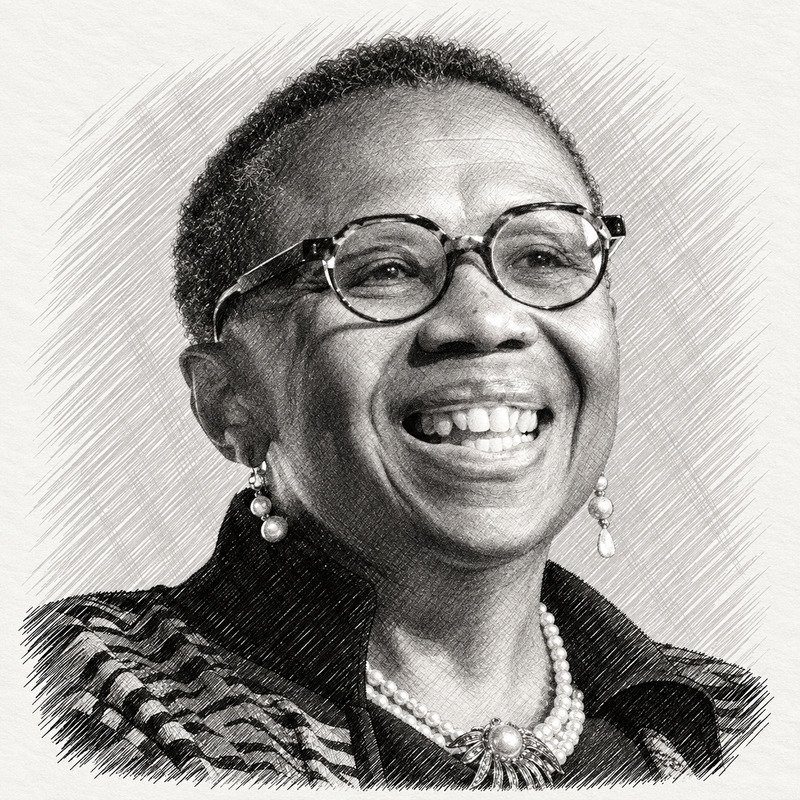
PERSON
Vanessa Northington Gamble
1953–
Medicine · Public health · Bioethics
American physician, historian of medicine, and public-health ethicist whose scholarship and public service examine racism in medicine, segregated health institutions, medical mistrust, research ethics, and health equity.
At a Glance
- Primary fields
- Medicine; Public health; Bioethics
- Intellectual streams
- Research ethics & consent; Law & public policy; Boundary expansion
- Modes of contribution
- Critical / corrective; Legal / policy; Public / translational; Pedagogical
01 / LIFE & CONTEXT
Vanessa Northington Gamble is an American physician and historian whose scholarship examines the history of race and medicine in the United States. Educated at the University of Pennsylvania School of Medicine and Johns Hopkins University, where she pursued graduate training in the history of medicine, Gamble has devoted much of her academic career to recovering the experiences of African American patients, physicians, and medical institutions. Her research emerged from a concern that conventional histories of American medicine often overlooked the ways racial segregation and discrimination shaped access to healthcare. By examining the institutions Black communities established for themselves, she brought attention to a history that had received relatively little consideration in mainstream medical scholarship.
02 / KEY CONTRIBUTIONS
Gamble’s research has examined the relationship between racial discrimination, medical institutions, and African American experiences of healthcare. In Making a Place for Ourselves: The Black Hospital Movement, 1920–1945 (1995), she documented how Black physicians and communities established hospitals in response to exclusion from predominantly white medical institutions. Her 1997 article, Under the Shadow of Tuskegee: African Americans and Health Care, questioned the tendency to explain African American distrust of medicine almost exclusively through the Tuskegee Syphilis Study. Gamble argued that distrust needed to be understood against a longer history of unequal treatment, exclusion, and medical exploitation. Her work gave historical substance to questions about trust, institutional accountability, and racial inequality in healthcare.
03 / HISTORICAL ROLE
Historian of race and American medicine and chair of the Tuskegee Syphilis Study Legacy Committee.
04 / SELECTED WORKS & CONTRIBUTIONS
- Under the Shadow of Tuskegee: African Americans and Health CareJournal article · 1997
Roles and contributions
-
Chair
Tuskegee Syphilis Study Legacy Committee
1996–1997