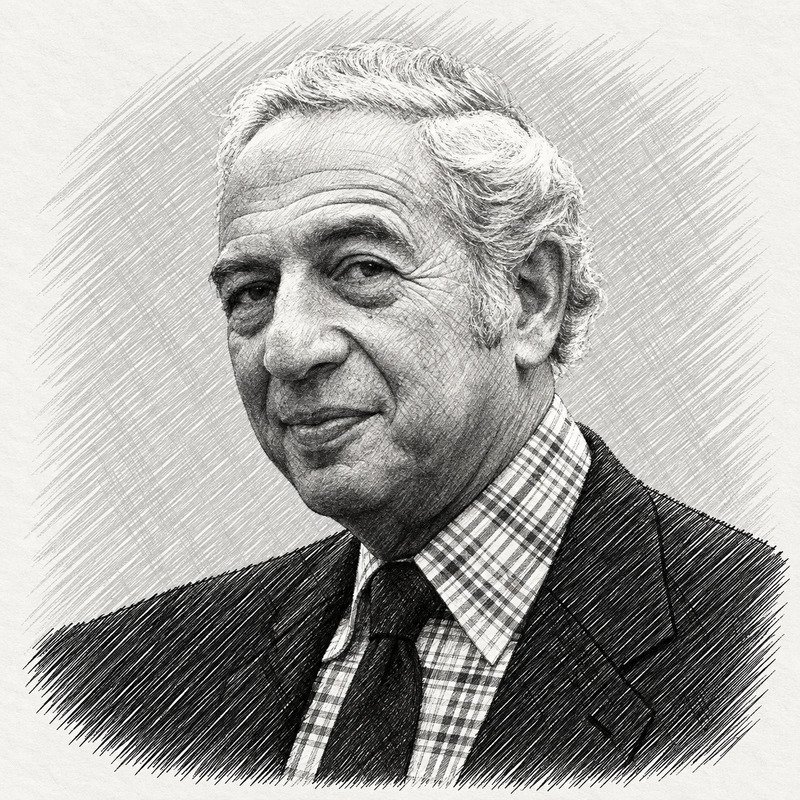
PERSON
Arthur W. Galston
1920–2008
Biology · Bioethics
American plant biologist and bioethicist whose opposition to the military use of Agent Orange helped shape debates over scientific responsibility, environmental ethics, and the social consequences of biological research.
At a Glance
- Primary fields
- Biology; Bioethics
- Intellectual streams
- Boundary expansion; Institution building; Law & public policy
- Modes of contribution
- Empirical / scientific; Critical / corrective; Pedagogical; Institutional; Public / translational
01 / LIFE & CONTEXT
Arthur W. Galston (1920–2008) spent most of his scientific career at Yale studying plant physiology. Others drew on findings from his early plant-growth research in developing the defoliant Agent Orange. Troubled by the human and ecological consequences of its use in Vietnam, he turned increasingly toward public criticism and the ethics of scientific work.
02 / KEY CONTRIBUTIONS
Galston traveled to Vietnam, documented environmental harm associated with herbicides, and joined calls for investigation of Agent Orange's toxicity and an end to its use. His teaching and writing then ranged across scientists' responsibilities, biological warfare, agricultural biotechnology, cloning, and stem-cell research. At Yale he taught bioethics and helped found an interdisciplinary center devoted to it.
03 / HISTORICAL ROLE
The Vietnam defoliation controversy posed a hard question about responsibility for the later uses of scientific knowledge. Galston carried that question into bioethics, linking environmental and military consequences to debates more often confined to medicine.