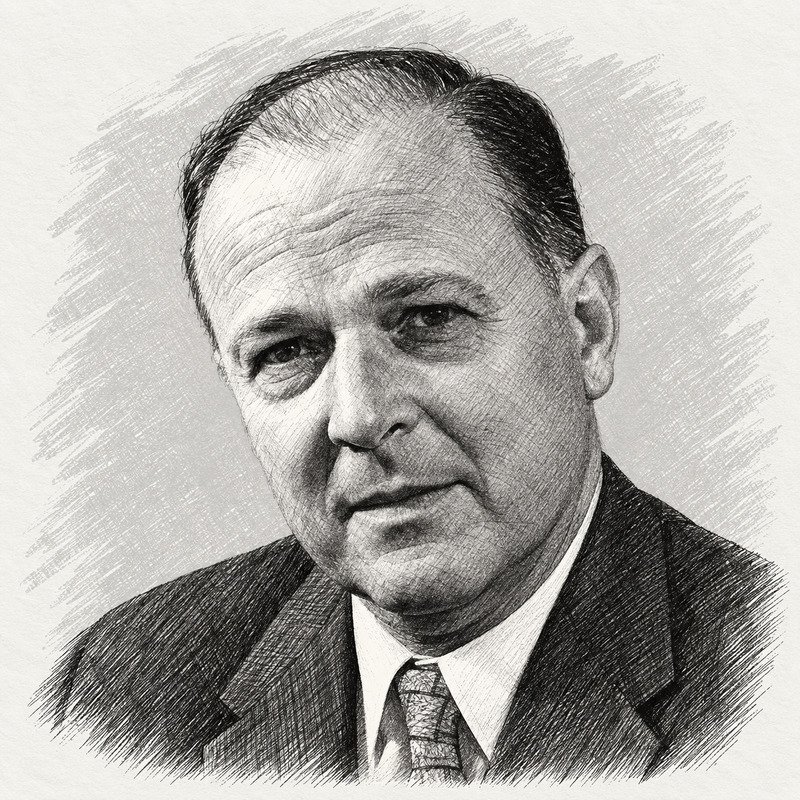
PERSON
Paul Ramsey
1913–1988
Christian Ethics · Theology
American Christian ethicist and Methodist lay theologian whose work helped shape the emergence of bioethics in the United States, particularly through his contributions to medical ethics, research ethics, informed consent, and debates over the moral limits of biomedical innovation.
At a Glance
- Primary fields
- Christian Ethics; Theology
- Intellectual streams
- Theological ethics; Clinical ethics & professionalism
- Modes of contribution
- Theological / religious; Conceptual / theoretical; Clinical / professional
01 / LIFE & CONTEXT
By the late 1960s, questions about experimentation, transplantation, genetics, and care near death were pressing medicine beyond its established professional rules. Paul Ramsey (1913–1988), a Christian ethicist who had taught at Princeton since 1944, entered these debates from theology. A visiting appointment in genetic ethics at Georgetown's medical school in 1968–1969 and lectures at Yale in 1969 placed him in the formative conversations of American bioethics.
02 / KEY CONTRIBUTIONS
In The Patient as Person (1970), Ramsey examined medicine through fidelity, covenant, and the obligations owed to patients and research subjects. Consent, the physician–patient relationship, and human experimentation were not merely procedural questions for him: they tested whether medical innovation respected persons. He carried that reasoning into debates about genetic intervention, organ transplantation, and dying, asking what moral commitments should govern new technical powers.
03 / HISTORICAL ROLE
Theological ethics was one of the languages in which early American bioethics learned to question biomedical progress. Ramsey's work gave that language a sustained place in discussion with medicine and science, particularly where new possibilities strained inherited ideas of duty and care.
04 / SELECTED WORKS & CONTRIBUTIONS
- The Patient as PersonBook · 1970
- Fabricated Man: The Ethics of Genetic ControlBook · 1970